

Driving Food Safety Through Digital Traceability and Transparency
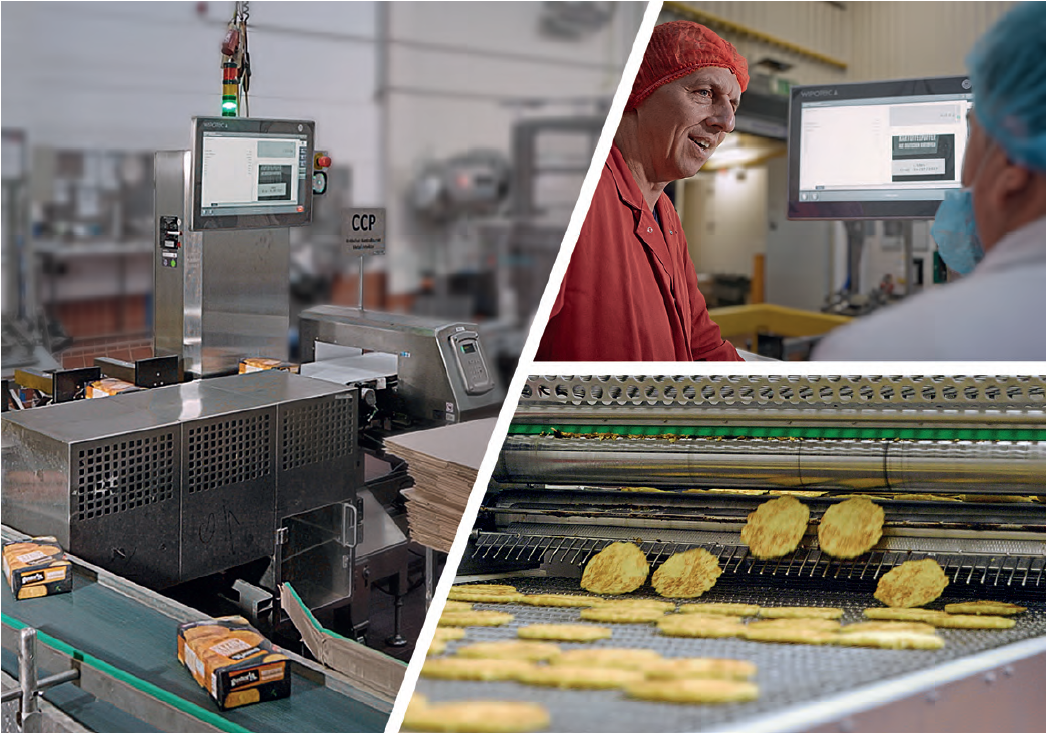
As demand for its products continues to rise,
Snackmaster has reached a point where traditional production setups were no
longer sufficient. Existing systems, although reliable, were fragmented across
multiple machines and suppliers. This created inefficiencies in operation,
maintenance, and data handling. To address these challenges, the company turned
to its long-standing technology partner, the German product in inspection
specialist Wipotec.
The collaboration between Snackmaster and
Wipotec spans nearly two decades, with product control systems still operating
after more than 18 years. This longevity reflects not only robust engineering
but also the importance of reliability in food production environments, where
downtime can have significant operational and financial consequences.
At the core of Snackmaster’s latest upgrade is
the integration of multiple quality assurance processes into a single, compact
system. Previously, tasks such as date coding, print inspection, metal
detection, checkweighing, and product rejection were handled by separate
machines. Today, these functions are unified within Wipotec’s TQS (Track &
Trace Quality System), streamlining operations and reducing complexity on the
production line. This
saves space, simplifies setup, is quicker to use, and makes even complex tasks such
as camera inspection much easier. “We retrofitted cameras on several lines
ourselves. Training and programming them for different products involves many
challenges. With Wipotec, all of this is already integrated, making it much
simpler,” Deputy Technical Manager at Snackmaster Ralf Bistritzky explains.
This integration is particularly relevant in
the context of modern food safety requirements. Regulatory frameworks
increasingly demand end-to-end traceability, ensuring that every product can be
tracked back to its origin. Accurate marking of batch numbers, expiration
dates, and other key data is essential not only for compliance but also for
rapid response in the event of recalls.
In this regard, Snackmaster is preparing for
the next step in digitalization: the adoption of high-resolution 2D codes, such
as QR codes, printed directly on packaging. These codes can store significantly
more information than traditional linear barcodes, enabling enhanced
traceability and consumer transparency. Retailers are already pushing for such
capabilities, anticipating future regulatory and market requirements. The higher and reliable print
quality they have reached now with the Wipotec solution enables in-line
printing of high-resolution 2D codes with variable data. “Retailers have
already asked us whether our lines are ready to print 2D codes, for example for
best-before dates. So far, we can only do this on the line equipped with the Wipotec
TQS system,” says Bistritzky.
Equally important is the role of inspection
technologies in safeguarding product integrity. Metal detection and X-ray
inspection systems are critical in identifying foreign bodies, a key risk in
food production. Combined with precise checkweighing, these technologies ensure
that every product meets both safety and quality standards before leaving the
factory.
Another notable aspect of Snackmaster’s
modernization is the implementation of RFID-based user access. This feature
enhances operational security by ensuring that only authorized personnel can
access specific system functions. In an industry where human error can have
serious consequences, such controls add an additional layer of protection.
Digital connectivity is also playing an
increasingly central role. With connectivity solutions like Wipotec’s Comscale
(quality data management system), Snackmaster aims to centralize data across
machines, lines, and even production sites. This enables real-time monitoring,
performance analysis, and continuous improvement, all of which are essential in
maintaining competitiveness in a fast-evolving market.
Snackmaster’s journey illustrates a broader
trend in the food industry: the convergence of automation, data, and safety. By
investing in integrated systems and future-ready technologies, companies are
not only improving efficiency but also strengthening its ability to meet the
highest standards of food safety and traceability. For Snackmaster, Wipotec is not just a reliable
supplier, but also a partner with whom future steps in automation,
connectivity, and quality assurance will be pursued. “I give Wipotec my full
recommendation, a perfect 10 out of 10”, Bistritzky concludes.
In a sector where trust is paramount, such
investments are not optional. They are fundamental to ensuring that consumers
receive safe, high-quality products every time.
Wipotec
Australia will be present at Foodpro Melbourne 26-29 July (Stand AC16),
showcasing its complete range of control and inspection solutions for the food
manufacturing industry.
More
information on the topic can be found at Accurate
marking and verification with TQS, or by writing to info.au@wipotec.com